

what is functional lab testing?
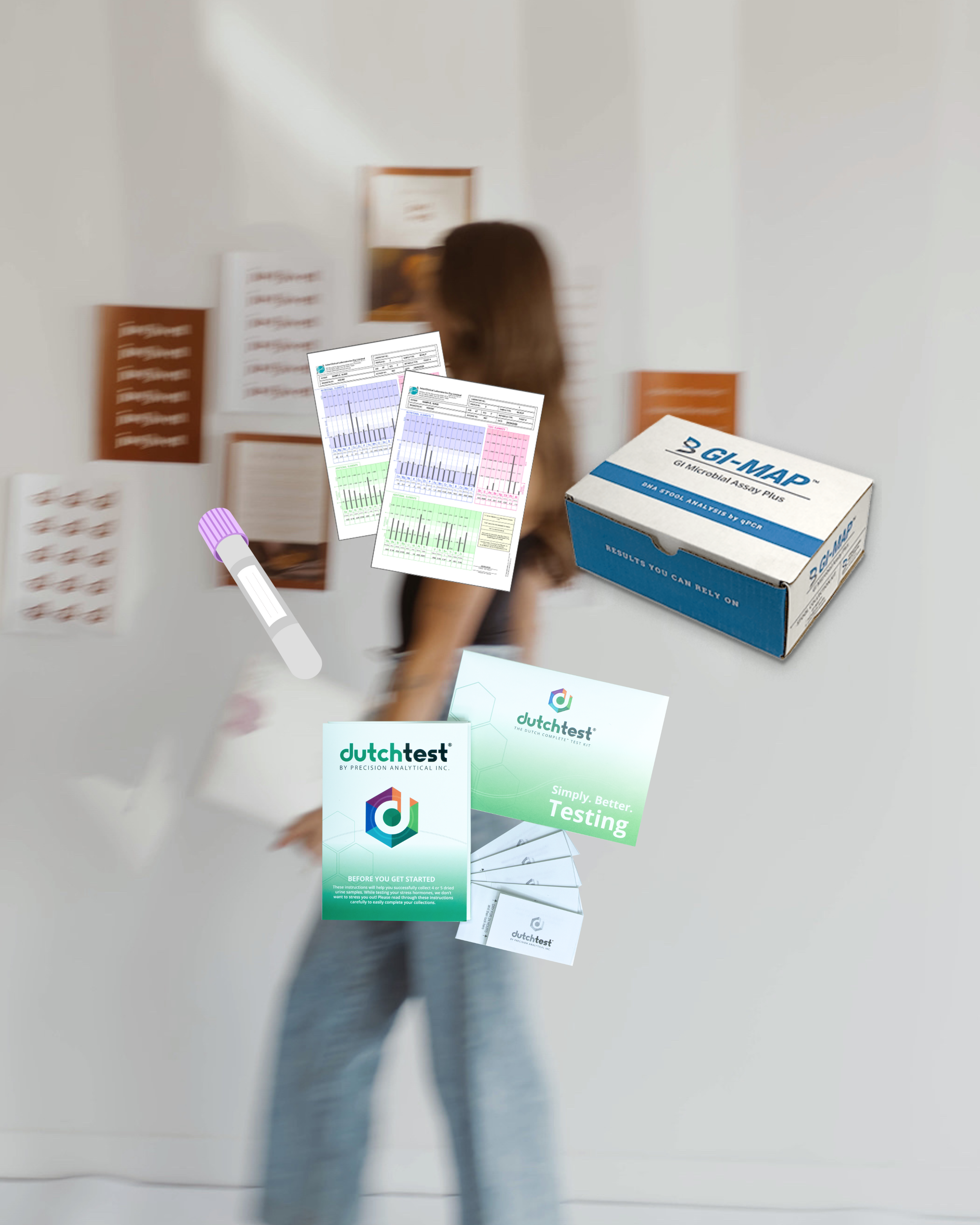
Functional lab testing utilizes a variety of different types of testing (blood, urine, hair, stool, etc). These tests reveal patterns that can be used to address imbalances in the body. Functional lab tests are not diagnostic but rather preventative. Jenna uses the following tests in her practice: Comprehensive Blood Panels, HTMA (hair sample), GI-MAP (stool sample), and DUTCH (urine sample). Learn more about functional lab tests below.
Price includes a functional analysis of your results delivered via voiceover presentation along with protocol recommendations and 2x email follow up. One email after you received the interpretation and protocol and one email 60 days into your protocol.
Comprehensive Blood Panel
blood sample
lab results are interpreted using functional analysis
functional analysis uses ranges determined by healthy individuals and differ than standard ranges
not used for diagnostic but prevention
patterns are recognized through individual biomarkers in order to address imbalances and deficiencies
Labs included: CBC w/ diff, CMP, Uric Acid, Magnesium, Phosphorus, Lactic Acid Dehydrogenase, GGT, Histamine, Homocysteine, Lipid Panel, Iron Panel (Iron, TIBC, Ferritin), Hemoglobin A1C, Insulin, Full Thyroid Panel (TSH, free T4, free T3, reverse T3, T3 uptake, thyroid antibodies), and Vitamin D
$350
HSA/FSA accepted
HTMA
hair tissue mineral analysis
hair sample
provides insight into cellular function through mineral analysis
measures macro minerals, trace minerals, and toxic minerals
often detects irregularities and imbalances before they’d show up on urine or blood samples
demonstrates an individuals response to stress along with nervous system function
evaluates minerals in relationship to one another to reveal patterns that provide insight on vitality, the thyroid, hormones, blood sugar regulation, and adrenal activity
$350
HSA/FSA accepted
stool sample
comprehensive stool analysis detects the presence of parasites, bacteria, viruses, fungi, and more.
includes assessment of intestinal health markers for insight on digestion, immune system, and inflammation
$550
+$15.50 shipping fee
HSA/FSA accepted
GI MAP
microbiome/stool analysis
4-5 urine samples
comprehensive testing of both adrenal and sex hormones, their metabolites and organic acids
adrenal hormones include cortisol awakening response, free cortisone, and free cortisol
sex hormones include estrogens, progesterone, and androgens
provides a more detailed and accurate assessment of hormones than saliva testing, blood testing, and 24 hour urine collection
$550
HSA/FSA accepted